Gather before you start
Everything should be within reach so you are not walking around with contaminated gloves.
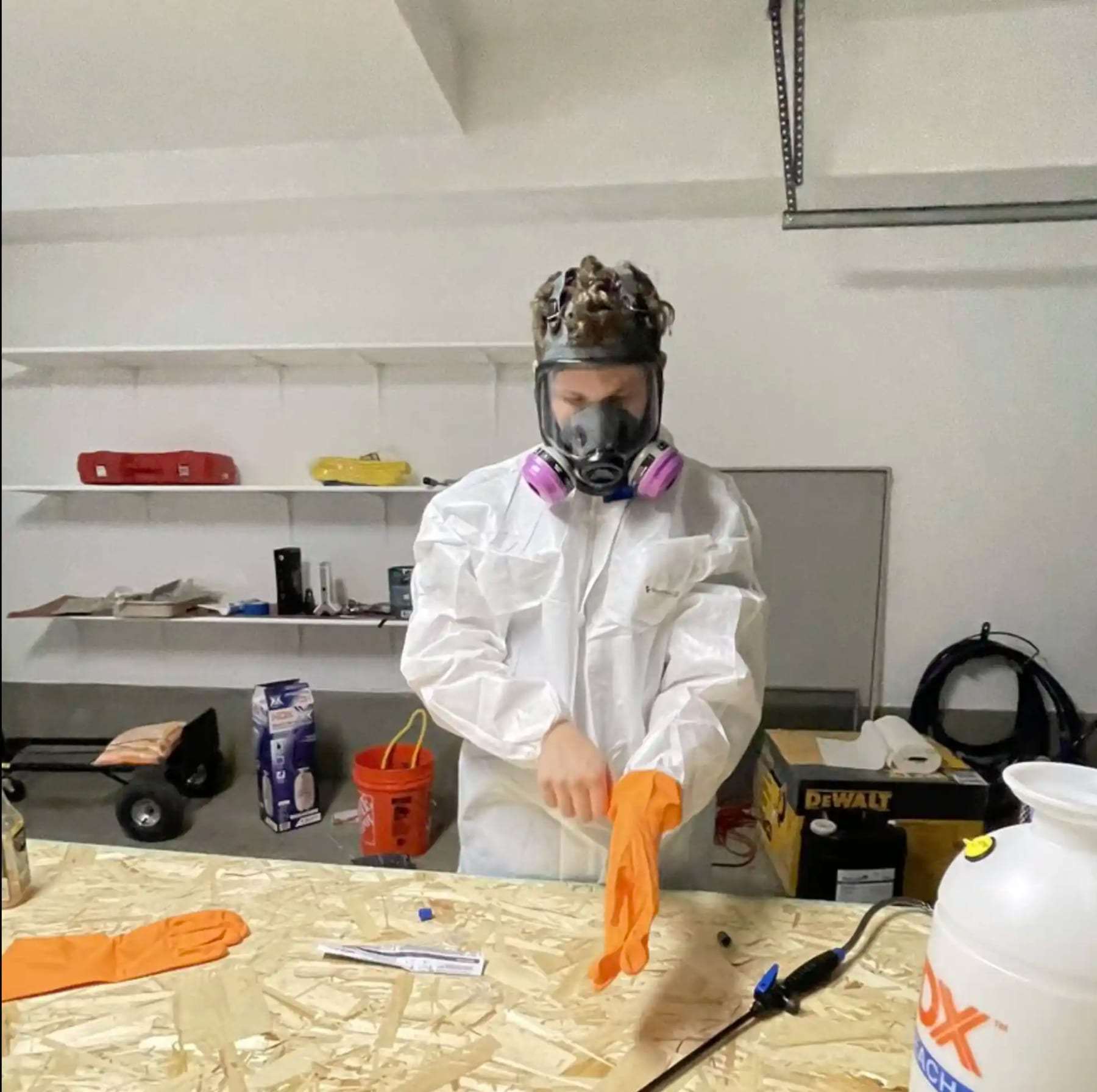
Technician in a protective suit and respirator pulling on gloves at a workbench. Illustrative only: this photo is not from a job tied to this site or a specific address.
The order that actually disinfects
- Keep others away.Ask family members to stay out of the room until you are done.
- Remove sharp pieces first.Pick up broken glass with tongs or a dustpan, never fingers, and put it in a rigid container.
- Absorb, then clean.Blot liquid with paper towels and bag them. Then wash the surface with soap and water. Disinfectants work poorly on surfaces still covered in blood.
- Disinfect and wait.Apply the disinfectant and leave it wet for the full contact time on the label, often several minutes. Wiping it off immediately undermines the step.
- Bag and wash.Put towels and gloves in the bag, tie it, and wash your hands thoroughly with soap and water.
Common mistakes and why they matter
- Mistake
- Spraying disinfectant onto a pool of blood
- Why it is a problem
- Can splash and the product cannot work through the volume
- Better choice
- Absorb first, clean, then disinfect
- Mistake
- Using a scrub brush on porous grout
- Why it is a problem
- Pushes material deeper and spatters
- Better choice
- Blot and use disposable cloths; consider professional help for grout
- Mistake
- Mixing bleach with other cleaners
- Why it is a problem
- Can release harmful gases, especially with ammonia or acids
- Better choice
- Use one product at a time and ventilate
- Mistake
- Reusing a sponge or rag
- Why it is a problem
- Carries contamination to the next surface
- Better choice
- Use disposables and throw them away
- Mistake
- Skipping the contact time
- Why it is a problem
- The disinfectant may not finish its job
- Better choice
- Follow the label exactly
Common questions
- Is bleach safe to use on blood?
- A freshly mixed household bleach solution is a widely recommended disinfectant for blood on hard surfaces. Follow the product label for dilution, use it with good ventilation, and never mix it with other cleaners.
- What about blood on clothing?
- Washable fabrics with small amounts of blood can usually be laundered separately in cold water and then hot, wearing gloves to handle them. Heavily soaked items are usually better discarded.
General information for the Denver area, not a quote or professional advice. In an emergency, call 911.