The setting at a glance
- Building
- Hypothetical 1980s mid-rise office building in the Denver Tech Center area
- Affected spaces
- Shared restroom, one tenant suite on the same floor, the ceiling of the suite below
- Materials
- Ceramic tile restroom, carpet tile in the suite, drywall partitions, lay-in acoustic ceiling below
- Parties
- Building owner and property manager, two tenants, their insurers
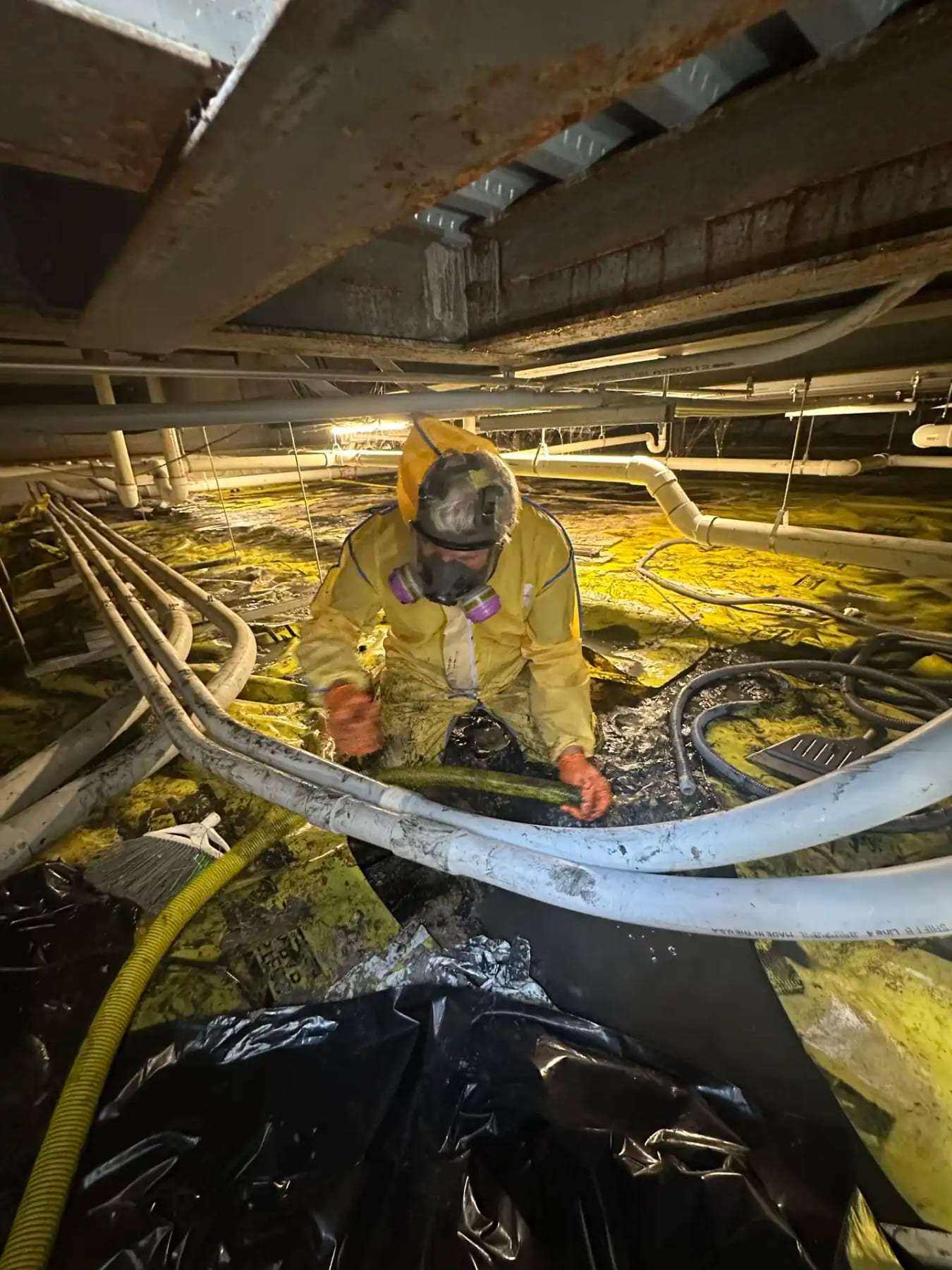
Technician in a yellow protective suit among hoses and insulation in a crawlspace. Included to show the kind of work involved, not a property or job connected to this site.
The situation
Illustrative example. Not a real job or customer.
A flush valve sticks on a Saturday. Water from the toilet runs for hours, spreads across the restroom floor and passes under the wall into a neighboring tenant's suite. By Monday morning, the suite's carpet tiles near the wall are wet and the ceiling tiles in the suite below are stained and sagging.
- Arriving staff notice the smell and the wet carpet. The office manager keeps employees out of the area and calls the building's property manager.
- Building engineering shuts the water supply to the fixture and checks for electrical hazards near the wet carpet and in the ceiling below.
- The property manager closes the restroom and the affected part of each suite, notifies both tenants, and reports the loss to the building's insurer.
- A cleanup provider confirms the water came from a toilet, so it is treated as sewage-contaminated, not clean water.
- Carpet tiles, the lower portion of the shared drywall partition and wet ceiling tiles below are removed and bagged. The restroom tile floor is cleaned and disinfected; grout is checked.
- Wall cavities and the floor slab are dried and confirmed dry before rebuilding.
- Employees in both suites are moved to other areas until the work is finished and the space is cleared for use.
Each suite is back in use after repairs, with documentation of what was removed. The tenants' and building's insurers sort out responsibility using the property manager's records.
What made this go smoothly
Tenant responsibilities versus building responsibilities
Leases vary; this split is typical but should be checked against the actual lease.
| Usually the building's | Usually the tenant's |
|---|---|
| Shared restroom, plumbing fixtures and building systems | Tenant improvements such as carpet and partitions, depending on the lease |
| Base building drywall and ceiling grid | Furniture, files, electronics and inventory |
| Coordinating access and contractors in common areas | Business interruption and temporary workspace for staff |
General information for the Denver area, not a quote or professional advice. In an emergency, call 911.