Why this matters along the Front Range
Hantavirus pulmonary syndrome is spread mainly by deer mice, which are common across Colorado, including in the foothills west of Denver and on the plains to the east. People are usually exposed in enclosed spaces that have been closed up for a while: sheds, garages, cabins, crawlspaces, barns, storage units and homes that sat vacant. Opening and cleaning those spaces in spring is a typical exposure scenario.
Early symptoms can resemble the flu, with fever and muscle aches, and can progress to serious breathing problems. Anyone who develops those symptoms within several weeks of cleaning rodent-infested areas should tell a doctor about the exposure. The Colorado Department of Public Health and Environment publishes guidance on prevention; it is worth reading before tackling a large job.
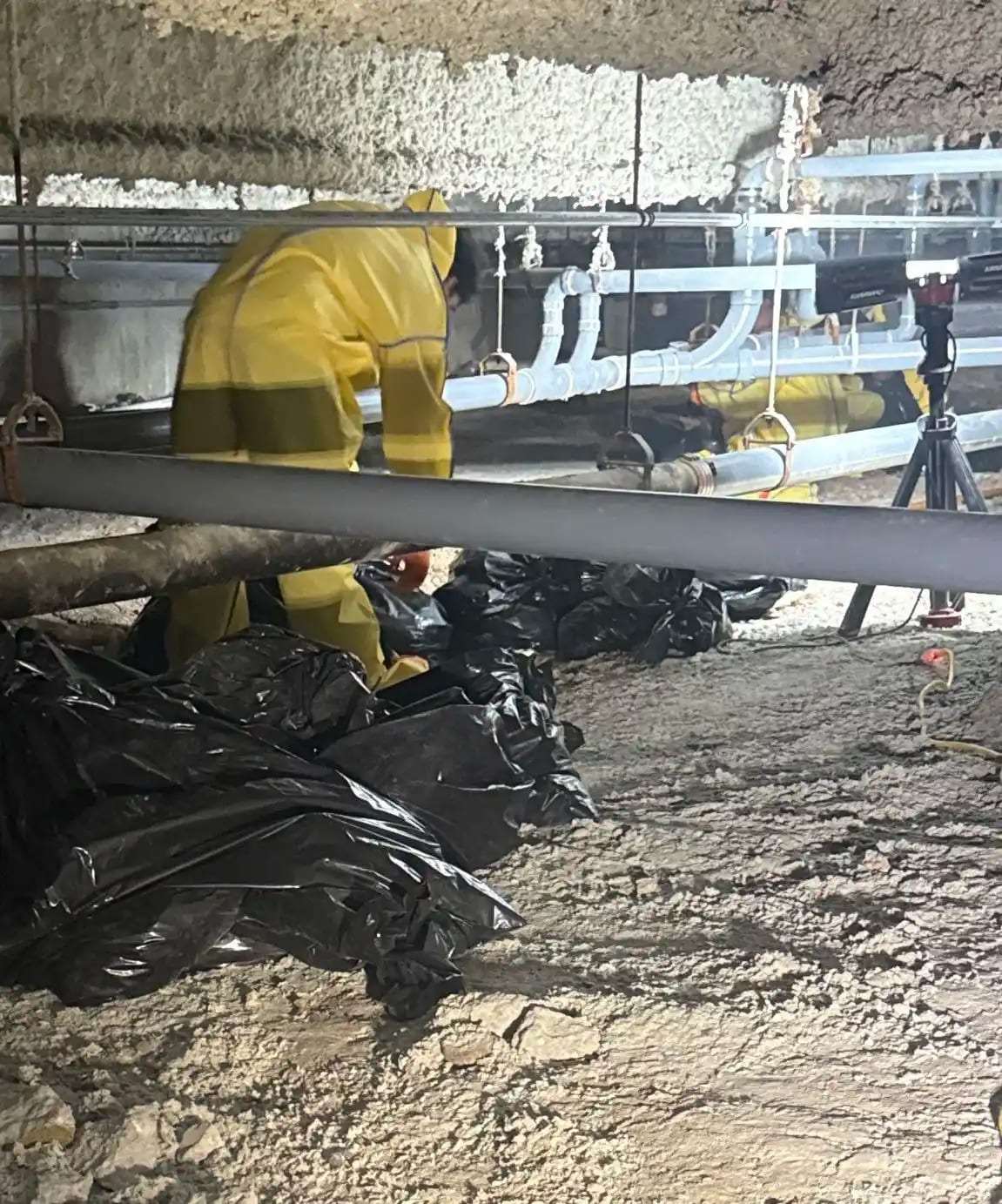
Worker in a yellow protective suit filling disposal bags in a dirt crawlspace. A general example of this kind of work, not a photo of a particular home, business or job.
For a small, manageable area
- Air it out first.Open doors and windows and leave the space for at least half an hour before working, staying out while it airs.
- Protect yourself.Wear rubber or nitrile gloves. For anything beyond a few droppings, a properly fitted respirator rated for particles offers more protection than a dust mask.
- Soak, then wait.Spray droppings, nests and dead rodents with a disinfectant or a fresh bleach solution until thoroughly wet, then let it sit for about five minutes.
- Wipe and bag.Pick up the wet material with paper towels, place it in a plastic bag, seal it, and place that bag in a second bag.
- Clean the area.Mop or wipe floors and surfaces with disinfectant. Wash gloved hands, remove gloves and wash bare hands with soap and water.
Signs the job should go to trained help
Common questions
- Do I need to worry about house mice in the city?
- The main carrier in Colorado is the deer mouse, which can enter homes, garages and sheds anywhere in the metro. Treat any droppings with the same wet-cleaning precautions rather than trying to identify the species.
General information for the Denver area, not a quote or professional advice. In an emergency, call 911.